what does a heritage monument become if you use it for an evening?
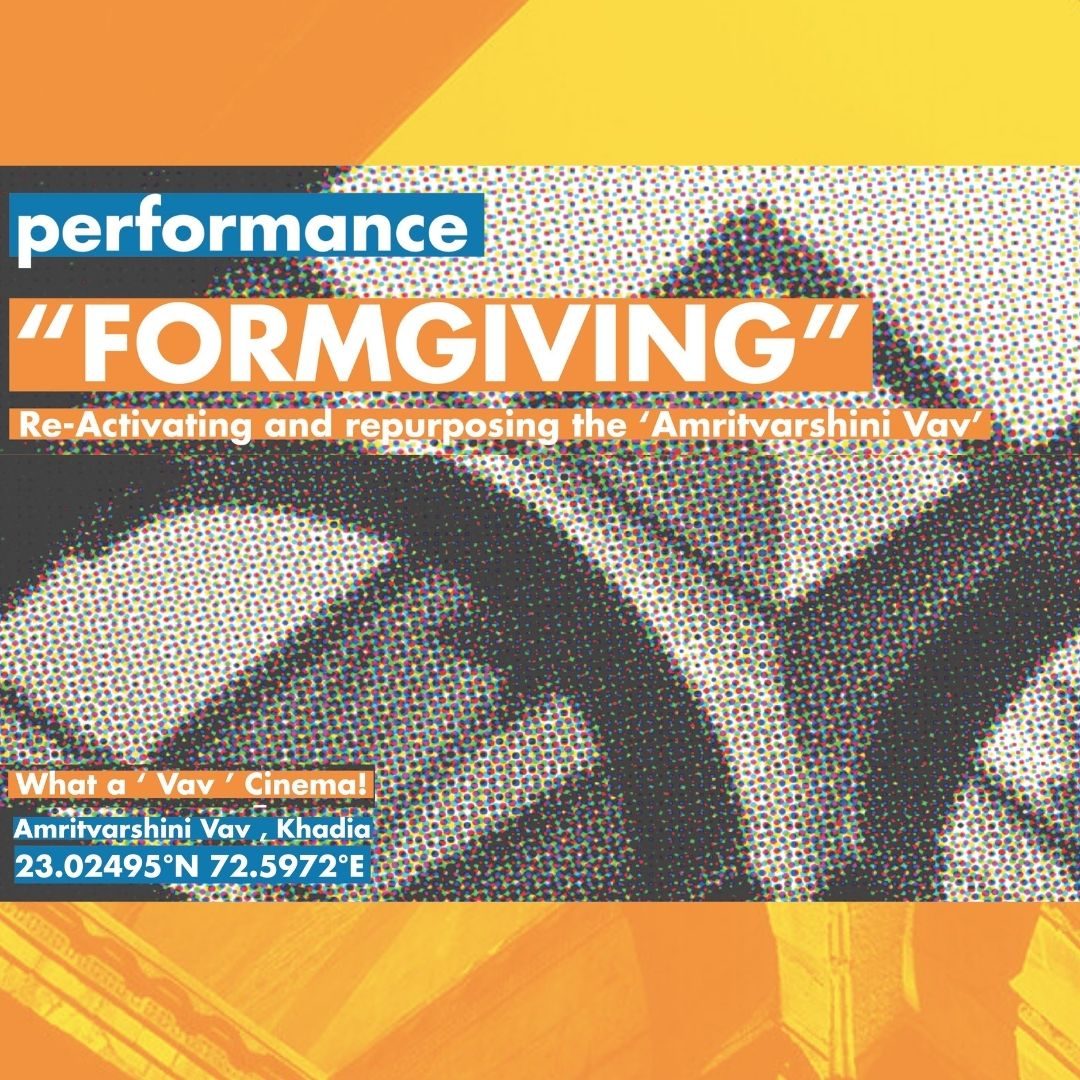
Formgiving, one evening that turned Amritvarshini Vav, a stepwell in Khadia, into a cinema.
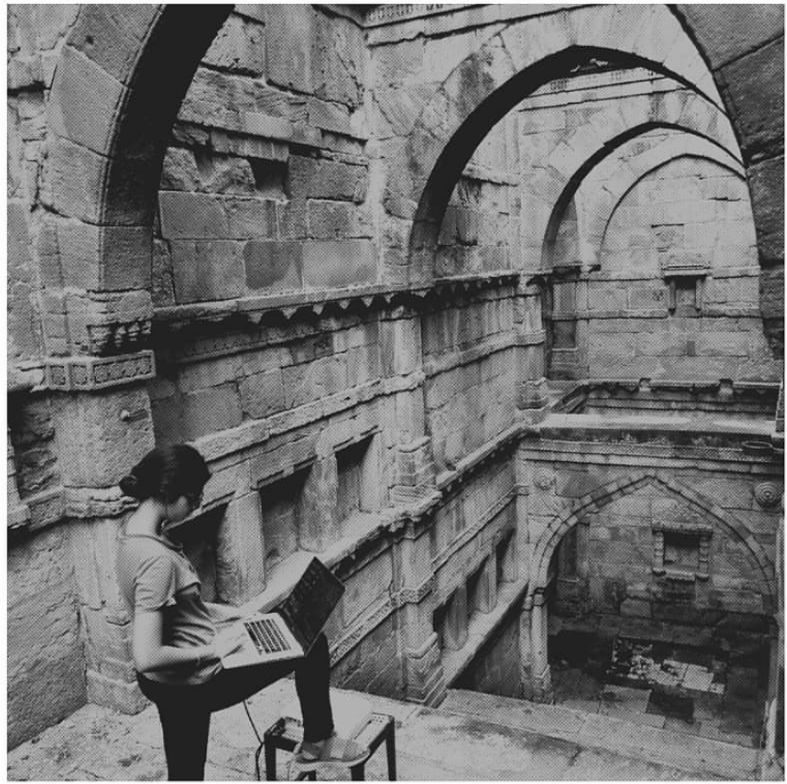
Amritvarshini Vav is a small eighteenth-century stepwell inside Ahmedabad's walled city, at 23.02495° N, 72.5972° E, protected, dry, and mostly closed. The performance was simple: a white sheet across the arch at the bottom of the steps, a projector on the top landing, and an invitation. By eight in the evening the steps were an auditorium. The film was not the point. The point was to see whether a monument the city preserves by keeping people out could be brought back to use by letting them in, for two hours, without changing a stone.
- (role)
- performance · set-up · documentation
- (period)
- 2018 · one evening
- (context)
- amritvarshini vav · khadia · ahmedabad
- (status)
- performance
A well with steps for seats
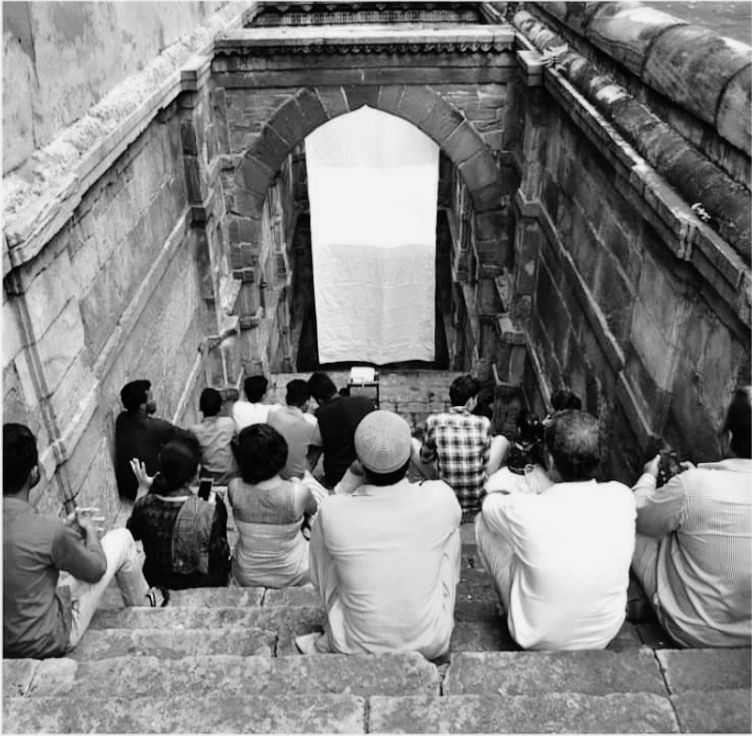
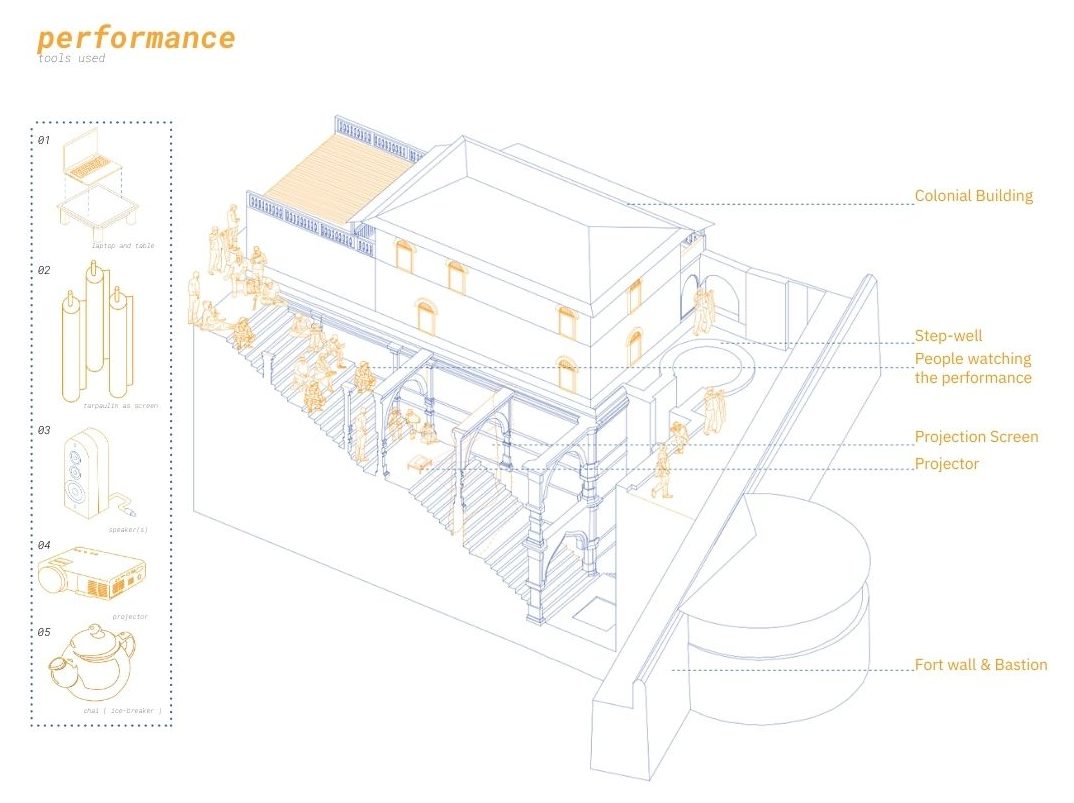
Ahmedabad's walled city has dozens of stepwells, most of them dry, protected, and shut. The Amritvarshini Vav at Khadia is one of the smallest: a flight of steps down to a well, a colonial building over one side, the fort wall and a bastion on the other. Its section is an auditorium's, steps facing an arch, and the performance took that literally.
A sheet, a projector, a cable
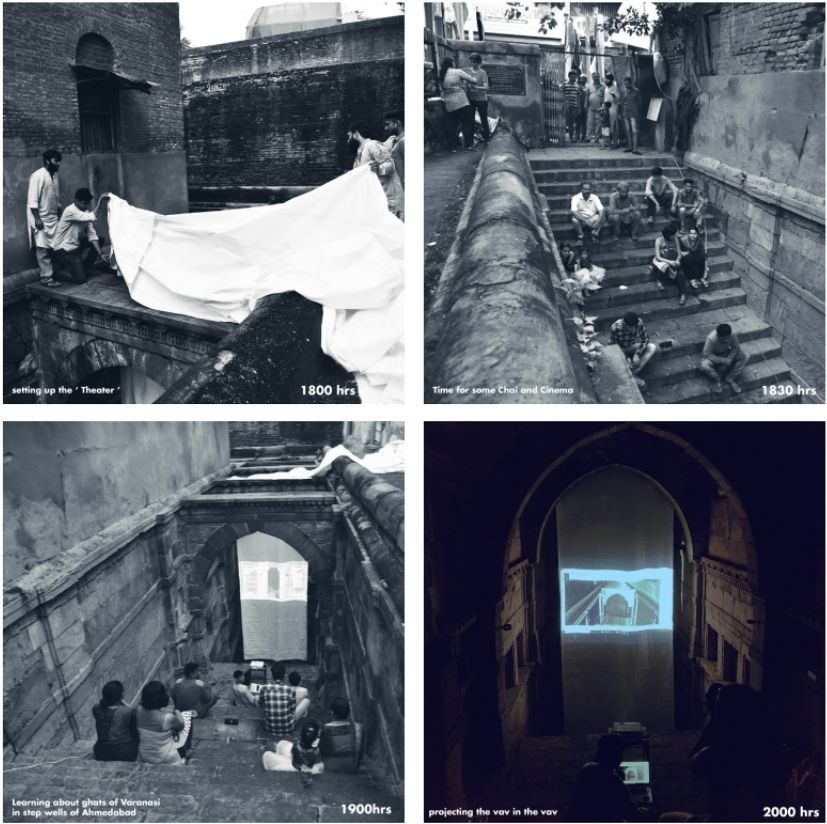
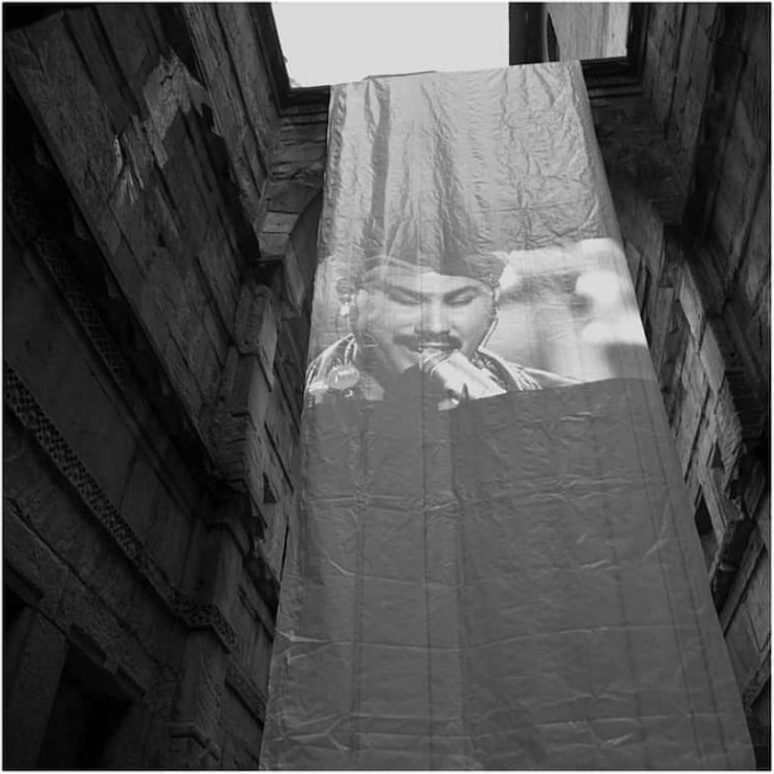
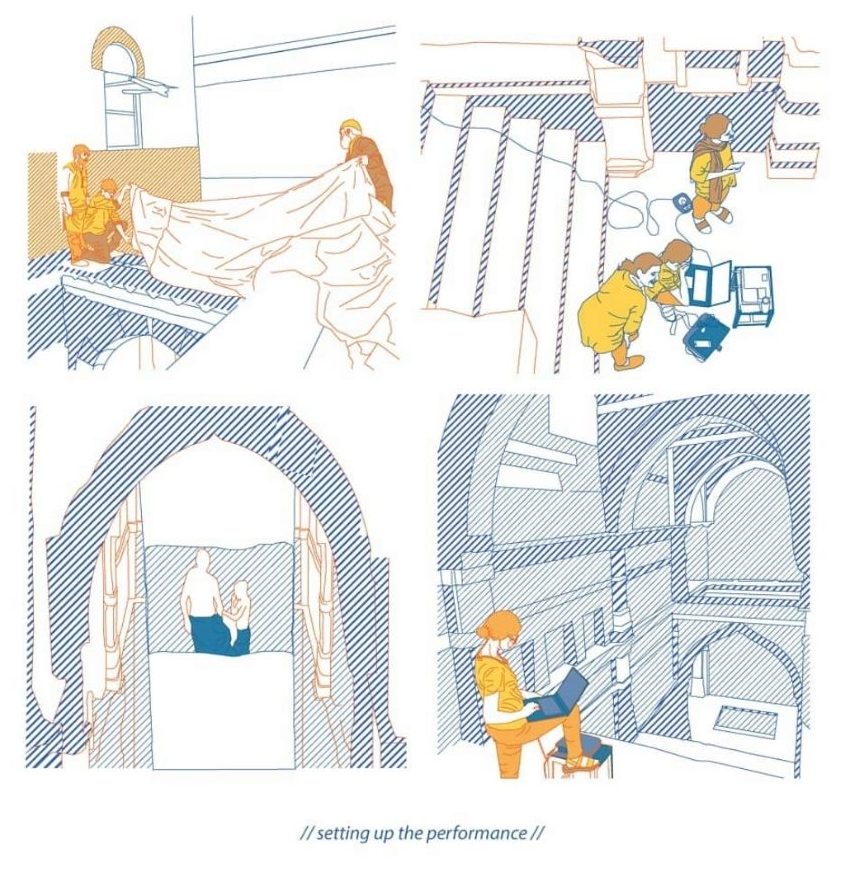
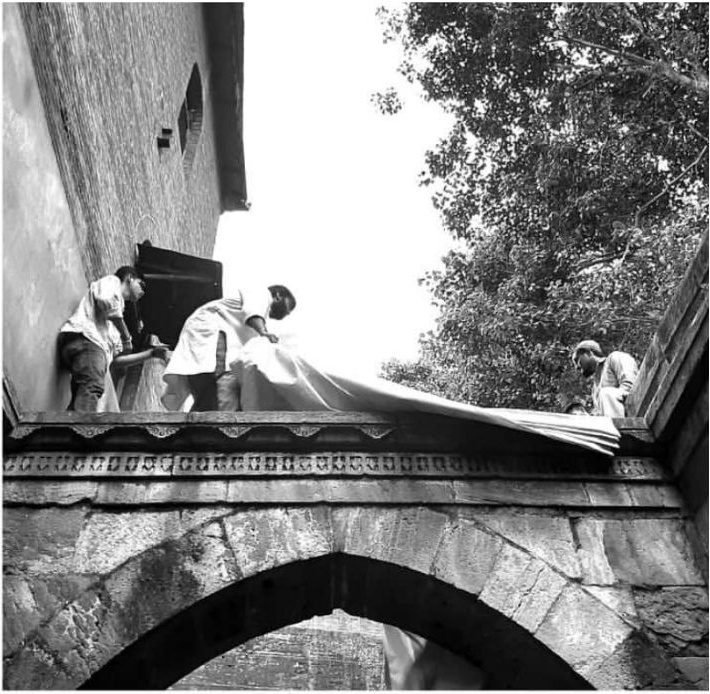
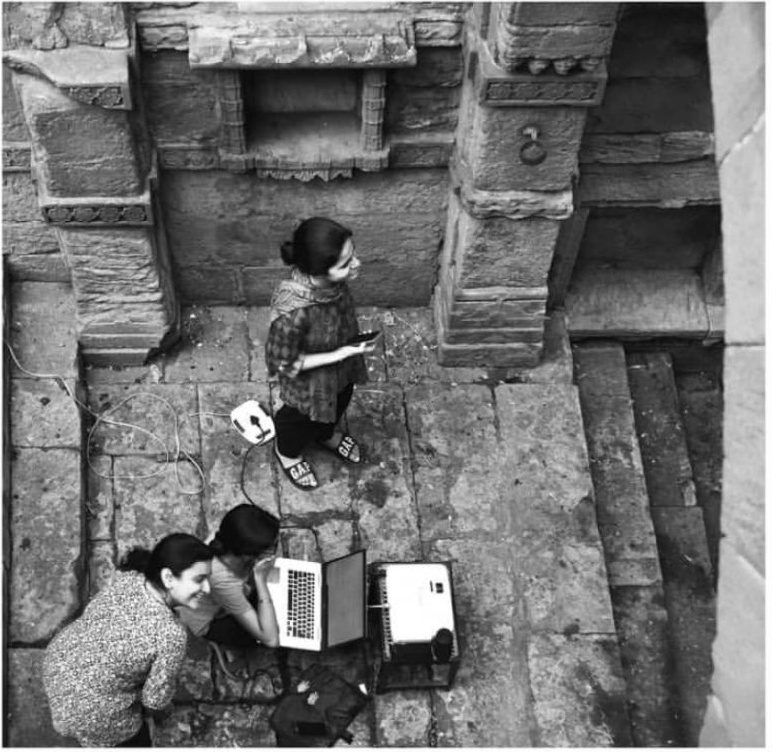
A white sheet hung from the parapet and pulled square across the lower arch. A projector on the top landing, a laptop on the step below it, a cable to the nearest plug. Three people to hang the cloth, one to aim the light. The whole set-up fits in a rickshaw, and the monument is untouched.
What a vav cinema
From six the sheet went up; by eight the steps were full. The film mattered less than the fact of it: a place the city keeps by keeping people out was in use for two hours because people were let in. The last image thrown onto the sheet was the vav itself, projected onto its own arch. A monument's future use is a matter of permission, not construction.